
Festive Season Selling Strategy: Maximize Sales During Diwali, Eid & Navratri
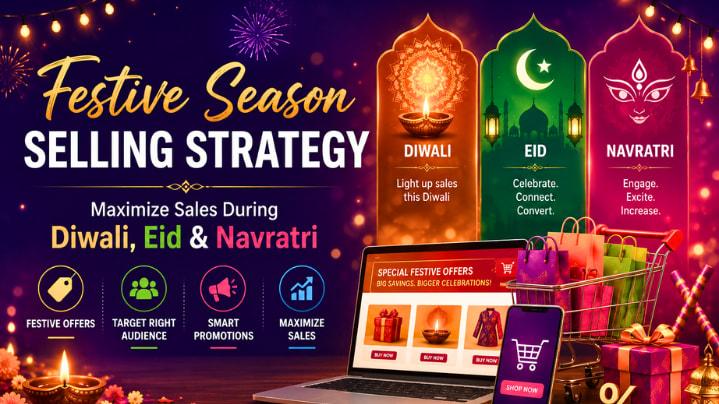
Want to maximize sales during Diwali, Eid, and Navratri? Discover proven festive season selling strategies for Indian resellers backed by 2025 data, product tips, and WhatsApp selling tactics.
India does not just celebrate festivals. It shops for them. From the first day of Navratri to the eve of Diwali, from the run-up to Eid to the nights of Durga Puja, Indian consumers open their wallets wider than at any other time of the year. For resellers and small business owners on social commerce platforms, the festive season is not just a good opportunity. It is the most important business window of the entire year.
And the numbers prove it. India's 2025 Diwali season alone recorded a staggering 6 trillion rupees in retail sales, up significantly from 4.25 trillion rupees in 2024. Online order volumes grew 24% year on year during the 2025 Diwali festive period, while gross merchandise value surged 23% in the same window. The festive season covering Navratri through Diwali is now responsible for some of the biggest revenue months any Indian seller will ever see.
The question is not whether the opportunity exists. It clearly does. The question is whether you are prepared to grab it.
This guide will walk you through everything you need to know about building a festive season selling strategy that works for Diwali, Eid, and Navratri, with practical steps you can start using today.
Why the Indian Festive Season Is a Once-a-Year Goldmine for Resellers
Before diving into tactics, it helps to understand just how different the festive period is from the rest of the year.
Indian consumers spend differently during festivals. Gifting becomes a social obligation. New clothes are bought for every occasion. Homes are decorated. Sweets are exchanged. Electronics are purchased as household upgrades. All of this happens in a compressed window of a few weeks, and much of it now happens online.
Research from 2025 shows that 93% of Indian consumers shopped online during the festive season, with fashion, home décor, and health and beauty leading the charge. The average Indian shopper spent over 23,000 rupees during the festive period in 2025, and 83% of shoppers planned to spend more compared to the previous year.
What makes this even more exciting for resellers is the geographic shift happening right now. Tier 2 and Tier 3 cities contributed around 55% of total festive orders in 2025. This means that the customers buying through WhatsApp groups, Instagram stories, and social commerce platforms are no longer just metro shoppers. They are buyers from Meerut, Surat, Coimbatore, Bhopal, and Patna who are discovering products through trusted social connections and making purchases with real intent.
If you are a reseller, this is your audience. And during the festive season, they are ready to buy.
Understanding the Three Biggest Festive Windows: Navratri, Diwali, and Eid
Each of these festivals has a distinct shopping personality. Knowing the difference helps you plan your inventory and your messaging correctly.
Navratri: The Fashion and Tradition Trigger
Navratri is nine days of celebration, dance, devotion, and new clothing. It is primarily observed in Gujarat, Rajasthan, Maharashtra, and increasingly across North India and urban pockets nationwide. But its e-commerce impact is national.
During Navratri, traditional ethnic wear sells like nothing else. Chaniya cholis, lehengas, kurtis, dupattas, and accessories like bangles, jhumkas, and maang tikas fly off virtual shelves. Home décor items tied to the goddess Durga puja see a significant uptick. Pooja accessories, diyas, and prayer items also perform well.
Navratri also acts as a warm-up for Diwali. Shoppers are already in a festive mindset and spending. Research confirms that Navratri kicks off the festive spending season that then accelerates through Dussehra and peaks at Diwali. If you get a customer buying from you during Navratri, there is a strong chance they come back for Diwali.
The key Navratri selling insight is speed. The nine-day window passes quickly. You need your products promoted, your WhatsApp catalogue updated, and your order process smooth before Navratri begins, not during it.
Diwali: The Biggest Sales Event of the Year
Diwali is the Super Bowl of Indian e-commerce. No other festival comes close.
The 2024 Diwali period saw fashion sales surge 42% and overall online sales rise 14% compared to the same period in 2023. Home and garden products exploded too, with light ropes and strings up 204%, candles up 122%, and dinnerware rising 89%. Traditional sarees and lehengas jumped 78%, while coats, jackets, and festive apparel also saw strong growth.
What is critical to understand about Diwali is that shoppers start early. Data shows that the average consumer journey during Diwali spans 15 days from product discovery to purchase, and some deliberate shoppers take over six weeks to finalise their decisions. This means if you start promoting only in the week before Diwali, you have already missed a large chunk of your potential buyers.
Online traffic peaks two weeks before Diwali, not on Diwali day itself. Sales actually dip slightly on the day of the festival. The shopping happens in the build-up. Plan your promotions accordingly.
For resellers, Diwali is the time to sell gifts, home décor, festive clothing, beauty and grooming hampers, kitchen accessories, and anything that makes a great present. The gifting angle is crucial. People are not just shopping for themselves. They are buying for families, neighbours, colleagues, and friends.
Eid: A High-Intent, Fashion-Forward Buying Season
Eid is celebrated across India twice a year, with Eid ul-Fitr and Eid ul-Adha together representing a major commercial window, particularly in states like Uttar Pradesh, Bihar, West Bengal, Kerala, and Maharashtra. The Eid shopper is highly fashion-focused. Ethnic and fusion wear, sherwanis, salwar suits, abayas, and festive accessories drive a significant share of purchases.
Beyond fashion, Eid also drives strong demand in food-related gifting, perfumes, attar, home décor, and personal care products. The gifting culture around Eid is strong, especially in communities where exchanging presents during the festival is a long-standing tradition.
The opportunity for social commerce resellers during Eid is particularly strong because buying decisions are heavily influenced by recommendations from family and community. If your products are seen in a trusted WhatsApp group or shared by a respected friend, conversion rates are noticeably higher than on anonymous marketplace listings.
How to Build Your Festive Season Inventory Plan
The biggest mistake Indian resellers make during festive season is stocking too late or stocking the wrong things. Here is how to plan better.
Start Stocking at Least 30 to 45 Days Before the Festival
Since shoppers begin browsing weeks before they buy, your products need to be available and actively promoted well in advance. For Navratri and Diwali, which often fall in September and October, you should ideally have your inventory and promotions ready by late August.
For Eid, which follows the Islamic calendar and shifts each year, mark the dates early and work backwards by 45 days to set your preparation deadline.
Identify Your Top Categories by Festival
Different festivals have different bestsellers. Use this as a rough guide:
Navratri: Ethnic wear, chaniya cholis, lehengas, bangles, jhumkas, dupatta sets, pooja items, diyas
Diwali: Home décor, diyas, string lights, candles, festive clothing, beauty and skincare gift sets, dry fruits and sweets hampers, kitchen accessories, gifting boxes
Eid: Sherwanis, salwar suits, abayas, fusion kurtas, perfumes and ittars, premium accessories, home fragrance products, gifting hampers
Create Bundle Offers and Gift Sets
Festive shoppers love the convenience of ready-to-gift combos. A set of three scented candles, a diyas-plus-rangoli kit, or a skincare bundle packaged in a gift box removes the effort of gift selection from the buyer. It also lets you increase your average order value naturally. Combine products that are already selling well and present them as a festive special.
Festive Season Marketing Strategies That Actually Work for Social
Commerce Sellers
Knowing what to stock is only half the battle. You also need people to see your products and trust you enough to buy.
Start Promoting Early on WhatsApp and Instagram
Your WhatsApp broadcast list and Instagram profile are your most powerful sales tools during the festive season. Begin teasing your festive collection at least three weeks before the main festival. Share product photos, behind-the-scenes restock updates, and early-bird offers. The goal is to build anticipation before the rush hits.
Think of it like a countdown. Week three before Diwali could be a sneak peek of your festive collection. Week two could be special offers with limited stock messaging. Week one is where you create urgency and push hard for final orders.
Use Festive-Themed Product Photos and Videos
During the festive season, presentation matters more than usual. A plain product photo that works in June will not excite someone in October when they are surrounded by Diwali decoration and gifting decisions. Shoot your products with festive backgrounds, diyas, rangoli, fairy lights, or festive props. If you are selling sherwanis or ethnic wear for Eid, show them styled with accessories in a celebration setting.
You do not need expensive photography equipment. A clean background, natural light, and a few festival props from a local store are enough to create images that feel relevant and attractive during the festive period.
Create Urgency with Limited Stock Messaging
Research on Indian e-commerce buying behaviour consistently shows that scarcity messaging works powerfully. During the festive season, when buyers are already emotionally charged and in a buying mood, phrases like "only 3 pieces left" or "last few pieces before Diwali" push fence-sitters to order immediately. This is especially effective on WhatsApp where the conversation is one-on-one and the trust level is already high.
Run a Referral Program During the Festive Window
Festive season is when people are already sharing recommendations with their networks. A simple referral incentive, such as a small discount or free shipping for every new buyer they bring in, can turn your existing customers into an active sales force. Social commerce thrives on word-of-mouth, and the festive season amplifies it. One happy customer sharing your Diwali saree to a family WhatsApp group can bring in five new orders overnight.
Personalise Your Festive Messages
Generic broadcast messages perform poorly compared to personalised ones. If you know a customer bought ethnic wear from you during Navratri last year, send them a message before this year's Navratri that mentions new arrivals in that category. If someone bought a gift set for Diwali in 2024, reach out ahead of Diwali 2025 with a "back by popular demand" angle.
Most social commerce sellers have this purchase history somewhere in their chats. Using it to personalise outreach is one of the easiest ways to increase repeat purchases during the festive season.
Managing Logistics and Delivery During the Festive Rush
The festive season is also the busiest and most chaotic period for logistics across India. Couriers are overloaded. Delivery timelines stretch. Returns pile up. If you are not prepared, customer experience suffers exactly when it matters most.
Here is how to stay ahead.
Lock In Your Logistics Partner Early
Courier services get stretched thin during Diwali and Eid weeks. If you are using a third-party logistics provider, confirm their capacity and festive season timelines well in advance. Know what their cut-off dates are for guaranteed pre-Diwali delivery and communicate those dates clearly to your buyers.
Data from Unicommerce shows that average delivery times during the 2025 festive season improved by 15% compared to the previous year thanks to better demand forecasting by sellers. You can achieve the same by planning shipments earlier and not waiting until the final week before the festival to fulfil orders.
Be Transparent About Delivery Timelines
Festive shoppers are gifting shoppers. They have hard deadlines. If someone orders a Diwali gift set on October 20th and it arrives on November 5th, the experience is a disaster regardless of product quality.
Set clear expectations at the point of sale. Tell buyers the estimated delivery window and flag any potential delays proactively via WhatsApp.
Sellers who communicate honestly during the festive season build significantly stronger long-term customer relationships than those who over-promise and under-deliver.
Reduce COD Orders During Peak Season
During the festive season, when order volumes spike and logistics are under pressure, a high proportion of COD orders can be devastating if returns spike simultaneously. Encourage prepaid orders by offering a small festive-special discount for UPI payments. This improves your cash flow, reduces the risk of return-to-origin incidents, and makes your operations more predictable during the busiest weeks of the year.
After the Festival: How to Keep the Momentum Going
Many resellers make the mistake of treating the festive season as a sprint with a hard stop. In reality, the period after Diwali and Eid holds significant opportunities too.
Post-Diwali, the wedding season kicks in almost immediately. Analysts estimated that nearly 4.8 million weddings were projected between November and December 2025, potentially generating another 6 trillion rupees in trade. Ethnic wear, home décor, gifting, and accessories continue to sell strongly in this window.
After Eid, buyers who received gifts or festival cash often return online to spend it. A well-timed "post-Eid special" promotion in the week after the festival can capture this spending intent.
Re-engage everyone who purchased from you during the festive season within 7 to 10 days of delivery. A simple "Hope you loved your Diwali order!" A message with a loyalty discount for their next purchase converts a one-time festive buyer into a repeat customer. This is where long-term reselling businesses are built.
The Festive Season Calendar Every Indian Reseller Should Know
Planning your festive strategy requires knowing your key dates well in advance. The Indian festive calendar broadly follows this cycle each year:
August to September: Raksha Bandhan, Ganesh Chaturthi, Onam (peak gifting season, ethnic wear, home décor begins warming up)
September to October: Navratri and Dussehra (ethnic fashion, pooja accessories, early festive décor)
October to November: Diwali (the biggest window across all categories)
April (varies by Islamic calendar): Eid ul-Fitr (fashion, gifting, personal care)
June to July (varies): Eid ul-Adha (fashion, gifting, food-related products)
Mark these dates at the start of each year and work backwards to set your inventory, promotion, and logistics milestones.
Final Thought: The Resellers Who Win Festive Season Prepare in the Off-Season
The most successful resellers on social commerce platforms do not just react to the festive season. They plan for it during the quiet months of January and February when the pressure is off and the thinking is clearer.
They identify which products performed best in the previous year. They build their supplier relationships and negotiate better rates before demand spikes. They grow their WhatsApp lists and Instagram followers steadily so that when the festive season arrives, they have a larger audience ready to buy.
The data is clear. India's festive season is growing every year, and it is growing fastest in the Tier 2 and Tier 3 cities where social commerce is strongest. The buyers are there, the intent is there, and the spending is there.
The only question is whether your preparation matches the opportunity.